Andrés

Month: January 2026

What Makes A Good Charity Social Media Ad?

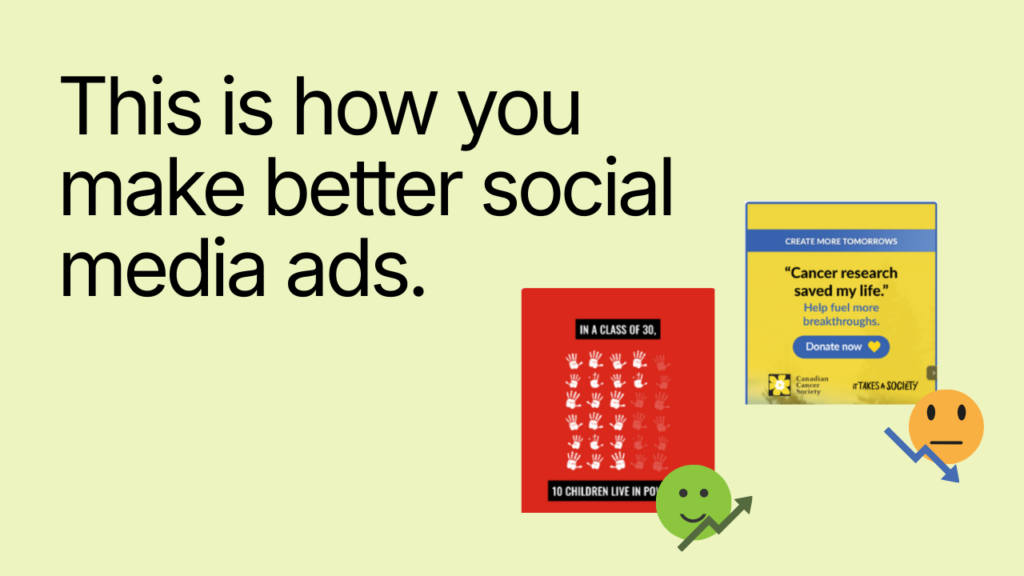
What makes a good social media ad for a non-profit? Most charity ads look like this: “$25 helps someone like John…” followed immediately by a big “Donate Now” button. Is this a bad ad? No. It can actually work quite well. However, it only works for a very small segment of people: those who are already familiar with your organization. Here is the problem: Chances are, most of the people scrolling past your content don’t know who you are. They don’t understand the depth of the problem you are solving, or the solution you need support to realize. If you treat a stranger like a loyal donor, you will lose them. If you want to grow and scale beyond your existing circle, you have to start speaking to broader audiences. Therefore, your goal shouldn’t be to make “one perfect optimized ad.” It should be to build a diverse portfolio of ads that connect with people at different stages of their journey.   The 5 Levels of Donor Awareness To fix your ad strategy, you need to diversify your creative approach based on Awareness Levels. Adapted from a framework by Dara Denney specifically for the charity sector, here is how you should be tailoring your content based on where a user is in their journey—from completely unaware to ready to donate. 1. The Unaware Stage The User Journey: These users are not thinking about the problem or your cause yet. They are scrolling for entertainment or connection. The Market: This is your Most Scalable audience. Best Formats: Pattern Interruption: Visuals that stop the scroll. Educational Content: content that teaches rather than asks. Humor/Celebrity Content: Leveraging familiar faces or lighthearted engagement to make an introduction. 2. The Problem Aware Stage The User Journey: These users recognize that a problem exists. They feel some emotional or personal tension around the issue, but don’t know what to do about it. Best Formats: Shocking Statistics: Data that visualizes the magnitude of the issue. UGC Single Testimonials: Real people talking about the issue. Founder’s Story: The personal “why” behind the mission. Identity-Based Content: Content that says, “If you are this type of person, you care about this.” 3. The Solution Aware Stage The User Journey: Users understand the problem and know that solutions exist. They are beginning to consider whether supporting a solution (not necessarily your solution yet) aligns with their values. Best Formats: Before and After: Visual proof of change. Program Highlights: How the work gets done. Beneficiary Testimonials: Stories from those who have been helped. Impact Statistics: The tangible results of the solution. 4. The Organization Aware Stage The User Journey: Users are aware of their problem, the potential solutions, and potentially how you compare with other non-profits. They are vetting you. Best Formats: Transparency Content: Showing where the money goes. 3 Reasons Why: Clear arguments for why your organization is the right choice. Differentiation: What makes you unique compared to other orgs? Donor Testimonials: Social proof from people just like them. 5. The Most Aware Stage The User Journey: These users know your organization, trust your work, and understand your impact. They are deciding when and how to act. The Market: This audience is Most Likely To Convert. Best Formats: Direct CTAs: “Donate Now” or “Join us.” Offers: Matches or specific giving tiers. Awareness Days: leveraging timely events (e.g., Giving Tuesday). Peer-to-Peer Events: Community fundraising. The Takeaway Stop trying to force the “Most Aware” strategy on “Unaware” audiences. When you look at the table above, you’ll see that the vast majority of the market exists in the first three stages. If your only ad strategy is a direct ask, you are ignoring the people who need to be educated and inspired before they are ready to give. Build a portfolio of ads that paints a picture for every person, no matter where they are in their journey. That is how you scale impact.
What Skills Do You Need to Build an Agile In-House Paid Media Team?

Taking your paid media operations in-house is a major milestone. It signals a shift from simply “running ads” to building a sustainable growth engine. When done correctly, the benefits are transformative. Modern paid media allows you to achieve the “Holy Grail” of marketing: building brand awareness and capturing conversions simultaneously. Plus, today’s algorithms are smarter than ever; when fed the right data, they become less invasive, delivering helpful solutions rather than annoying interruptions. But after working with numerous charities and startups, I’ve learned that success doesn’t come from a massive department. It comes from a specific set of skills. You don’t necessarily need seven different people. In fact, I’ve seen that smaller, tighter teams are often better. They are agile. They can respond instantly when things are underperforming, optimize on the fly, and scale aggressively when they find a winner. However, while one person can wear multiple hats, these are the distinct “hats” that need to be worn to avoid burning through your budget. 1. Creative Strategy This is the ability to be obsessed with the “Who” and the “Why.” You need the skill to research the industry, compile inspiration, and spot trends before they become clichés. It’s not just about making ads; it’s about finding different angles for different audiences, levels of awareness and personalities. A good strategist understands that a single product or donation appeal can be told in five different ways to five different people. 2. Technical Implementation (The “Hacking” Skill) The algorithm needs fuel, and that fuel is data. This requires a technical mindset, specifically with Google Tag Manager and API integrations, to ensure the algorithm gets timely data. In my experience with charities, this is often the hardest part. Many non-profits use outdated donation platforms that don’t play nice with modern tech. You need someone with the technical grit to “hack” these integrations, ensuring that conversion modeling actually works. 3. Empathetic Storytelling I call this “storytelling” because “copywriting” feels too transactional. This skill requires an immense amount of empathy and a fresh perspective. It’s the ability to craft layouts and copy that tell a complete story. It’s about information architecture, knowing exactly what information a human being needs to feel safe making a decision, and presenting it in a way that feels natural. 4. Agile Web Development Great ads die on bad landing pages. You need the technical agility to refresh and update landing pages constantly. This isn’t about building a website from scratch every time; it’s about having the skills to tweak the UI, improve load speeds, and remove friction so that the momentum from the ad isn’t lost the moment they click. 5. Resourceful Content Creation (The Canva & CapCut Wizards) In the current landscape, you need the skill to produce volume with limited resources. This is about being a wizard with tools like Canva and CapCut. It’s the ability to take limited assets, stock footage, user-generated content, or simple photos, and turn them into wonderful, engaging stories. You don’t need a film crew; you need resourcefulness. 6. Marketing Automation The conversion is just the beginning. You need the skills to nurture the relationship immediately after the click. This involves setting up “Thank You” emails, welcome series, and customer journeys. It ensures that the hard work of capturing the lead doesn’t go to waste. 7. Data Analysis & Media Buying Finally, you need the navigator. This is the skill that often requires the most “school of hard knocks” experience. I know from experience that this intuition is often built on wasted ad dollars. You need the ability to explore what’s working and what’s not, and communicate it to the rest of the team immediately. This skill involves catching insights quickly, managing budget through seasonality, and spotting “creative fatigue” or audience saturation before it drains your bank account. The Power of the Agile Team When you have these skills in-house, whether spread across two people or five, you unlock true agility. You aren’t waiting weeks for an agency to update a banner; you are reading the data in the morning, updating the creative by lunch, and scaling the budget by dinner. That is how you win at paid media.