What makes a good social media ad for a non-profit?
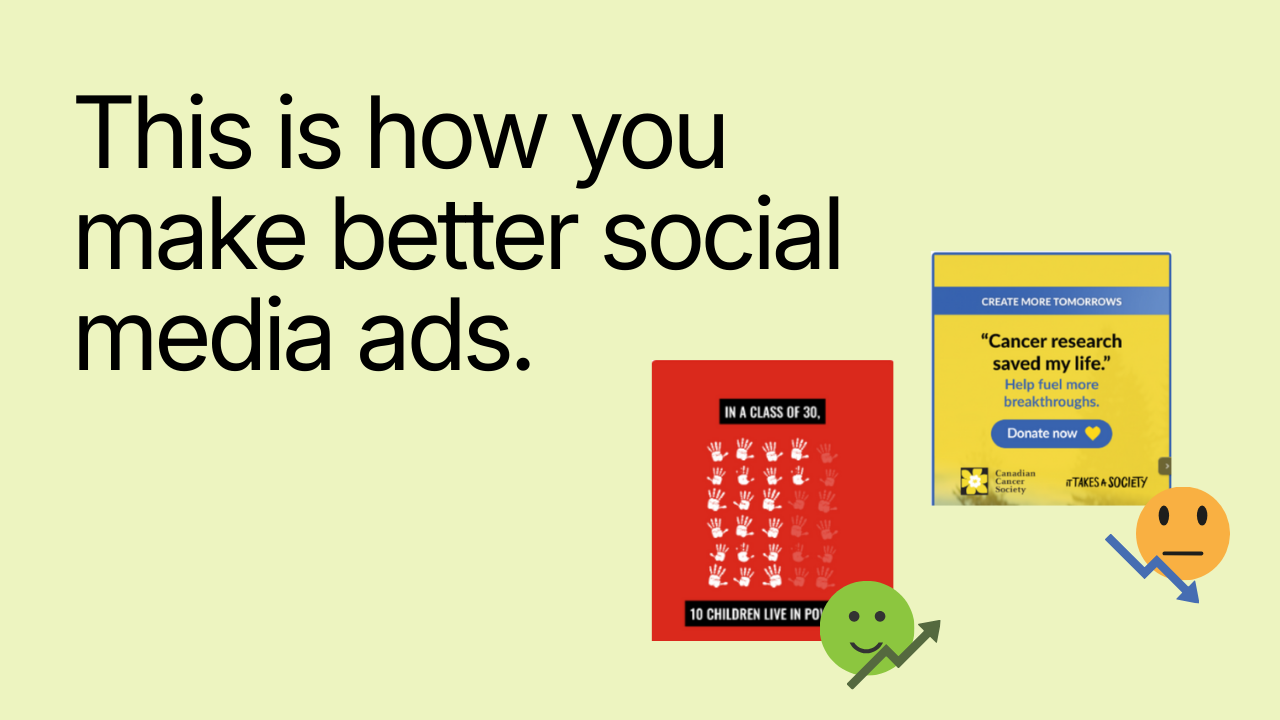
Most charity ads look like this:
“$25 helps someone like John…” followed immediately by a big “Donate Now” button.
Is this a bad ad? No. It can actually work quite well. However, it only works for a very small segment of people: those who are already familiar with your organization.
Here is the problem: Chances are, most of the people scrolling past your content don’t know who you are. They don’t understand the depth of the problem you are solving, or the solution you need support to realize.
If you treat a stranger like a loyal donor, you will lose them. If you want to grow and scale beyond your existing circle, you have to start speaking to broader audiences.
Therefore, your goal shouldn’t be to make “one perfect optimized ad.” It should be to build a diverse portfolio of ads that connect with people at different stages of their journey.
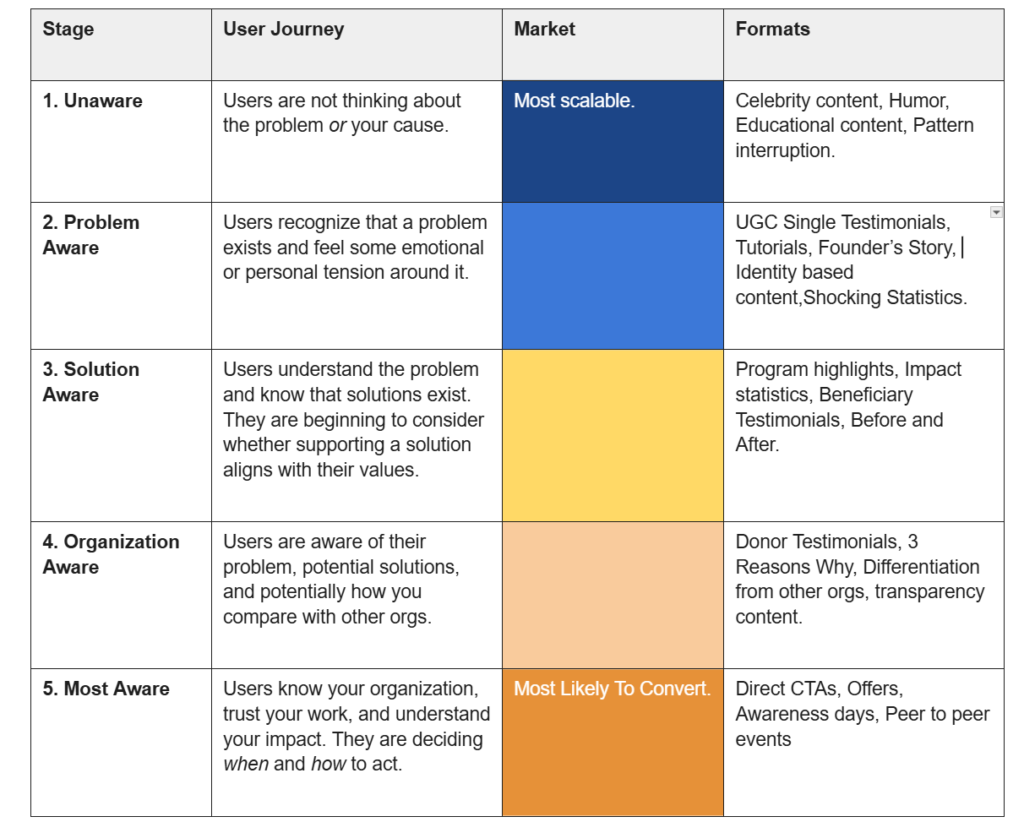
The 5 Levels of Donor Awareness
To fix your ad strategy, you need to diversify your creative approach based on Awareness Levels.
Adapted from a framework by Dara Denney specifically for the charity sector, here is how you should be tailoring your content based on where a user is in their journey—from completely unaware to ready to donate.
1. The Unaware Stage
The User Journey: These users are not thinking about the problem or your cause yet. They are scrolling for entertainment or connection. The Market: This is your Most Scalable audience. Best Formats:
-
- Pattern Interruption: Visuals that stop the scroll.
-
- Educational Content: content that teaches rather than asks.
-
- Humor/Celebrity Content: Leveraging familiar faces or lighthearted engagement to make an introduction.
2. The Problem Aware Stage
The User Journey: These users recognize that a problem exists. They feel some emotional or personal tension around the issue, but don’t know what to do about it. Best Formats:
-
- Shocking Statistics: Data that visualizes the magnitude of the issue.
-
- UGC Single Testimonials: Real people talking about the issue.
-
- Founder’s Story: The personal “why” behind the mission.
-
- Identity-Based Content: Content that says, “If you are this type of person, you care about this.”
3. The Solution Aware Stage
The User Journey: Users understand the problem and know that solutions exist. They are beginning to consider whether supporting a solution (not necessarily your solution yet) aligns with their values. Best Formats:
-
- Before and After: Visual proof of change.
-
- Program Highlights: How the work gets done.
-
- Beneficiary Testimonials: Stories from those who have been helped.
-
- Impact Statistics: The tangible results of the solution.
4. The Organization Aware Stage
The User Journey: Users are aware of their problem, the potential solutions, and potentially how you compare with other non-profits. They are vetting you. Best Formats:
-
- Transparency Content: Showing where the money goes.
-
- 3 Reasons Why: Clear arguments for why your organization is the right choice.
-
- Differentiation: What makes you unique compared to other orgs?
-
- Donor Testimonials: Social proof from people just like them.
5. The Most Aware Stage
The User Journey: These users know your organization, trust your work, and understand your impact. They are deciding when and how to act. The Market: This audience is Most Likely To Convert. Best Formats:
-
- Direct CTAs: “Donate Now” or “Join us.”
-
- Offers: Matches or specific giving tiers.
-
- Awareness Days: leveraging timely events (e.g., Giving Tuesday).
-
- Peer-to-Peer Events: Community fundraising.
The Takeaway
Stop trying to force the “Most Aware” strategy on “Unaware” audiences.
When you look at the table above, you’ll see that the vast majority of the market exists in the first three stages. If your only ad strategy is a direct ask, you are ignoring the people who need to be educated and inspired before they are ready to give.
Build a portfolio of ads that paints a picture for every person, no matter where they are in their journey. That is how you scale impact.